MRI-MAI™
Reading the structures inside the body by watching movement.
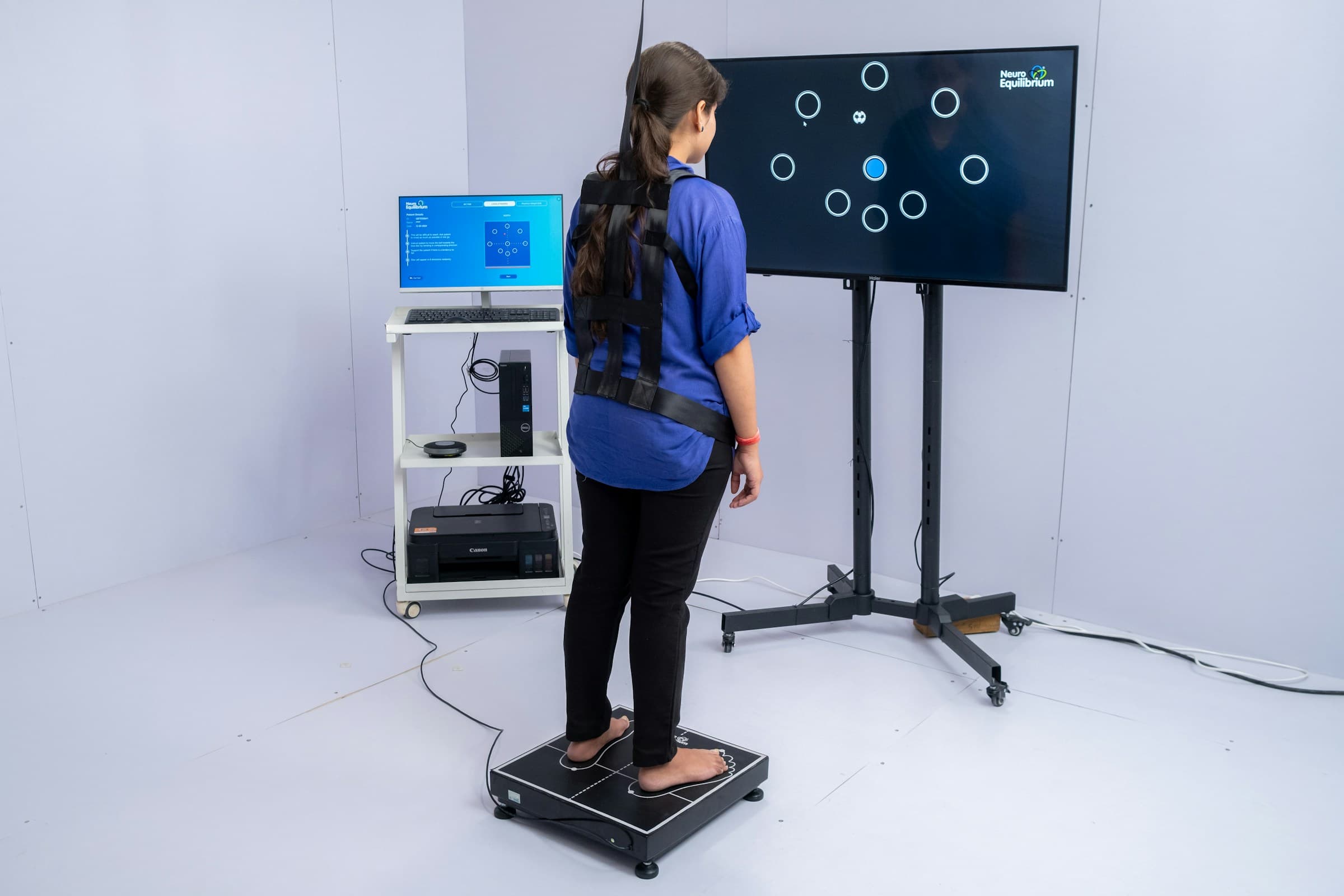
A deep tech platform that fuses MAI Motion’s dynamic biomarkers with segmented MRI data through a proprietary reverse deep learning engine — training AI on large-scale paired datasets to learn movement signatures and map them to anatomical structures.
The long-term objective is to reduce reliance on static, expensive imaging by enabling portable motion capture from a single smartphone camera, democratising access to objective musculoskeletal analysis across Europe.
TRL 5→8
Prototype to CE-Marked
2M+
MRI Biomarkers Per Scan
150k
Motion Data Points
The Problem & Market Opportunity
Europe’s silent epidemic.
Musculoskeletal disorders are the leading cause of disability in 160 countries, disproportionately affecting women, older adults and rural populations. Despite that prevalence, clinical management remains fragmented — the impact of movement problems often goes unnoticed, and many cases are identified only after serious damage.
1.71bn
People affected by musculoskeletal disorders globally (WHO, 2022)
€240bn
Annual cost to the EU — equivalent to 2% of GDP
60%
Of all long-term work absences in the EU (EU-OSHA, 2020)
- 01
Static, non-weightbearing imaging
Up to 50% of musculoskeletal MRIs are deemed unnecessary or of low clinical value, and none capture how joints function under real-world load.
- 02
Expensive and delayed
Scans cost €450–€650 each, with EU waiting times exceeding 100 days in several countries.
- 03
Subjective first-line assessment
Clinical assessment — often the first line of evaluation — is around 60% accurate, compounding delays and misdirected referrals.
- 04
Late recognition
Osteoarthritis diagnosis is delayed by approximately two years in the UK, 1.5 years in the Netherlands and 1.6 years in Spain.
Motion analysis is locked in the lab
Gold-standard motion analysis systems are confined to elite sports labs and research centres, inaccessible to primary care. That blind spot limits early identification, stratification and referral accuracy, leading to costly overtreatment or missed prevention.
The application frames this as a system redesign opportunity rather than a technology opportunity — building a new category of functional movement stratification.
The Reverse AI™ Engine
Designed not just to detect dysfunction — but to explain and predict it
A multi-modal deep learning architecture extending the MAI Motion® platform, which the application states will be patented during the project.
Deep learning MRI segmentation
A fine-tuned nnU-Net architecture automatically delineates cartilage, meniscus and ligaments from raw MRI, extracting over 2 million internal biomarkers per scan with a validated Dice score above 0.91.
Markerless 3D motion capture
A spatiotemporal 3D-CNN system reconstructs a full-body kinematic profile from a single smartphone camera, generating over 150,000 dynamic data points with angular deviation under 1.8° from gold-standard systems.
Multi-modal correlation layer
A proprietary model correlates anatomical structures to movement anomalies using feature embedding and attention-based correlation, providing an interpretable link between cause and effect.
Clinical integration
Built for interoperability with hospital systems using DICOM for imaging and HL7/FHIR for EHR integration, with architecture compliant with the ISO/IEC 81001-5-1 framework.
Predictive stratification
Using the existing paired multi-modal dataset, the application reports proof-of-concept that motion signatures can predict MRI-derived anatomical biomarkers. This project would expand the dataset across sites and demographics to improve generalisability and enable regulatory-grade validation.
Redesigning the MSK Pathway
Four points where the pathway changes shape.
Patient self-assessment at home
Guided assessments on a phone return an objective report on joint function, moving triage upstream and reducing the burden on primary care.
Physiotherapy & GP remote triage
Objective scores help clinicians decide whether an in-person visit or an MRI is necessary, leading to fewer low-value referrals.
Orthopaedic surgical planning
Uniting MRI anatomy with motion mechanics to identify how a specific lesion affects real-world function, enabling personalised planning.
Population health & equity
Advanced monitoring in rural, remote or under-served regions without expensive equipment or patient travel.
Where It Has Reached
TRL 5, achieved Q2 2025.
The prototype, with nnU-Net-driven automated segmentation, was beta tested across two clinics — MSK House in the UK and Hacettepe University in Türkiye — in a two-month pilot with 50 patients. These are the reported pilot findings, not regulatory-grade clinical evidence.
96%
Satisfaction rate
Across a two-month pilot with 50 patients in two clinics.
41%
Faster diagnosis
Reduction in diagnosis time reported in the pilot.
60%
Overlooked dysfunction found
Cases where subclinical dysfunction not visible on static imaging alone was identified.
28%
Better early detection
Improvement in early dysfunction detection compared with radiologist-only reporting.
Four milestones to TRL 8
The targets below are the application’s stated success criteria, to be validated during the project.
01
AI model integrating MRI and motion
Target — Motion-based biomarkers achieve sensitivity ≥80% in early MSD detection.
02
Anonymised research dataset
Target — ≥90% accuracy in joint detection across diverse demographics.
03
Full system integration
Target — ≥80% satisfaction on the System Usability Scale; ≥85% of clinicians report monitoring value.
04
Regulatory approval and compliance
Target — CE Class I issued; Class IIa file submitted; external GDPR audit passed.
Pan-European Advisory Board
A network built for multi-centre validation.
MSK Doctors coordinates the programme from the UK, supported by a scientific and clinical advisory board spanning four European countries — the foundation for multi-centre validation and EU-wide rollout.
University of Genoa
ItalyProf. Riccardo Ferracini
Joint replacement, arthroplasty outcome modelling and EU prosthesis registries; a key access point into the Italian MSK clinical trial ecosystem.
Val-de-Grâce
FranceDr François-Xavier Gunepin
Orthopaedic surgeon at Clinique Mutualiste de la Porte de L’Orient, contributing trauma surgery and surgical education expertise.
Hacettepe University
TürkiyeProf. Feza Korkusuz
Professor and Head of Sports Medicine at Hacettepe University Medical Faculty, Ankara — over 240 peer-reviewed publications and more than 9,000 citations.
Saint Spiridon Hospital
RomaniaProf. Luminita Labusca
Expert in regenerative orthopaedics and surgical innovation, with policy-level advisory roles in MSK development and EU translational programmes.
The application also names advisors at Grigore T. Popa University, Romania and the Medical University of Plovdiv, Bulgaria, and lists Prof. Xujiong Ye (University of Exeter) as strategic technical guidance.
Application-Stage Evidence Boundary
What the application does — and does not — establish.
This is a stage 1 short proposal describing a proposed programme and intended TRL progression. Market sizing, savings estimates and regulatory targets within it are projections.
Supported by the application
- An 18-month EIC Accelerator short application (stage 1) requesting €2,367,000 against a total project cost of €3,381,428.
- MAI Motion® is UKCA and MHRA registered, with an international patent published in October 2025 (PCT/GB2025/050722).
- A documented TRL history from Q1 2019 to TRL 5 in Q2 2025, including lab validation on 213 historical patient scans with 93.7% agreement against radiologist reports.
- Letters of intent secured from clinics, universities and hospitals in Romania, Türkiye, France, Italy, the UK and Austria.
Not established by the application
- That MRI-MAI can currently replace or reduce MRI scanning in routine practice — this is the programme’s long-term vision.
- That CE marking, FDA clearance or Class IIa registration have been obtained; they are project milestones.
- That the €750M addressable market, €125–175M imaging savings or CO₂e reductions have been realised.
- That the application was successful — this is a stage 1 short proposal, and no funding decision is recorded in it.
Source provenance
- Call
- HORIZON-EIC-2026-ACCELERATOR-01 — EIC Accelerator 2026, short application
- Official title
- A Deep Tech Stratification of Musculoskeletal Disorders: Fusing AI-Powered Motion Biomarkers with Machine Learning MRI Analytics to Disrupt the Clinical Decision-Support Ecosystem
- Coordinator
- MSK Doctors and Associates Ltd (United Kingdom)
- Proposed duration
- 18 months
- Proposed maturity
- TRL 5 to TRL 8
- Grant requested
- €2,367,000 of a €3,381,428 total project cost
Pathology through movement alone
The long-term vision is to train AI to identify pathology through movement alone — enabling earlier monitoring, stratification and more personalised musculoskeletal intervention, and reflecting a commitment to equitable, preventative care.
This application represents a first step into early monitoring of high-burden musculoskeletal disorders — back, knee and hip — though the platform architecture is disease-agnostic. Future phases would extend to shoulder and ankle pathology, post-traumatic joint degeneration and degenerative spine conditions.
European Clinical & Academic Collaboration
We welcome hospitals, universities and health-technology partners across Europe interested in multi-centre validation of motion-based musculoskeletal stratification.