D.R.E.A.M. KneeAI™
Plan the knee in motion — not only in still images.
D.R.E.A.M. KneeAI™ is a surgical-planning research programme designed to bring real-world movement into the pre-operative assessment of knee replacement.
Using MAI Motion, the concept seeks to derive a digital kinematic signature from markerless three-dimensional motion and translate it into personalised alignment insight. The programme describes this approach as Real-Life Kinematic Alignment.
RLK
Real-Life Kinematic Alignment
CRAFT
Dynamic Motion Biomarkers
3D
Markerless Pre-Operative Capture
The Surgical Challenge
A knee is replaced to move. Most planning still begins with the knee standing still.
X-rays and CT scans provide essential structural information, but they capture alignment in a fixed position. Robotic systems can execute a plan with great precision, yet precision alone cannot determine whether the original plan reflects the patient’s functional movement.
100k+
Knee replacements performed annually in the UK, as cited in the application
1 in 5
Patients reported dissatisfied after knee replacement in the source application
£15k
Illustrative revision cost per patient stated in the application
- 01
Static imaging
Weight-bearing radiographs and CT describe anatomy and alignment but not the full mechanics of movement.
- 02
Intra-operative balancing
Ligament tension and surgical judgement help guide alignment but are assessed in a constrained operative setting.
- 03
Robotic execution
Robotics can improve precision while remaining dependent on the assumptions built into a static plan.
- 04
Outcome variability
A technically well-positioned implant does not guarantee that movement will feel natural to every patient.
The gap is not surgical precision
It is knowing which alignment target is most appropriate for the individual patient before that precision is applied.
D.R.E.A.M. KneeAI™ is a research programme for patients in whom knee replacement is already appropriate. It supports the Replace stage of Regenerate | Repair | Replace, and is not intended to imply that replacement should occur earlier.
About the Programme
What D.R.E.A.M. KneeAI is designed to deliver
The programme extends the MAI Motion platform into pre-operative decision support by combining real-world movement, interpretable motion biomarkers and an alignment model.
Dynamic movement profile
Markerless capture is intended to quantify the knee during functional activities such as walking, squatting and bending.
CRAFT and global kinematics
Control, Repetition, Asymmetry, Flow and Twist are considered alongside broader movement patterns.
Digital kinematic signature
Multiple biomarkers are intended to form a personalised three-dimensional functional profile.
Alignment decision support
The model is designed to help surgeons explore a patient-specific alignment strategy before surgery.
Design Principle
Real-Life Kinematic Alignment asks a simple but important question: can the plan for a moving joint be informed by the way that patient actually moves?
A clinician-led
decision-support pathway.
The proposed application is intended to support surgical planning, not replace clinical judgement or autonomously determine implant position.
Prospective validation, comparison with established planning methods, usability testing and medical-software regulation are essential before clinical deployment.
Pre-operative assessment
Movement capture is intended to add functional context before the surgical plan is finalised.
Mobile-compatible capture
The MVP is described as a cross-platform application that can use standard cameras.
Repeatable baseline
A pre-operative movement profile may create a reference for later functional follow-up.
Workflow integration
Outputs must be interpretable alongside imaging, examination, implant planning and surgeon judgement.
Strategic Importance
Precision begins with the right target.
The programme is intended to create value across clinical care, research and the wider health system:
- Add dynamic function to the anatomical information used in knee-replacement planning.
- Explore alignment strategies that reflect individual movement rather than a single generic target.
- Complement robotic execution by improving the functional information available before surgery.
- Create an objective pre-operative baseline for research into recovery and satisfaction.
- Support implant, robotics and healthcare partnerships focused on personalised knee surgery.
Commercial & Health-System Alignment
A planning layer for surgeons, hospitals and technology partners.
The proposed model combines clinical deployment with subscription, licensing and co-development opportunities across the knee-replacement ecosystem.
Surgeons and hospitals
Potential decision support for pre-operative assessment and personalised planning.
Implant companies
Potential integration of functional biomarkers into implant planning and outcome research.
Robotics partners
A dynamic planning layer that may complement accurate intra-operative execution.
Research networks
Prospective studies comparing alignment strategies, recovery patterns and patient-reported outcomes.
Programme Foundation
Clinician-led programme
Professor Paul Lee provides orthopaedic, medical-engineering and clinical-research leadership.
AI and delivery
The MSK Doctors team combines computer vision, machine learning, project management and user-engagement expertise.
Integrated facilities
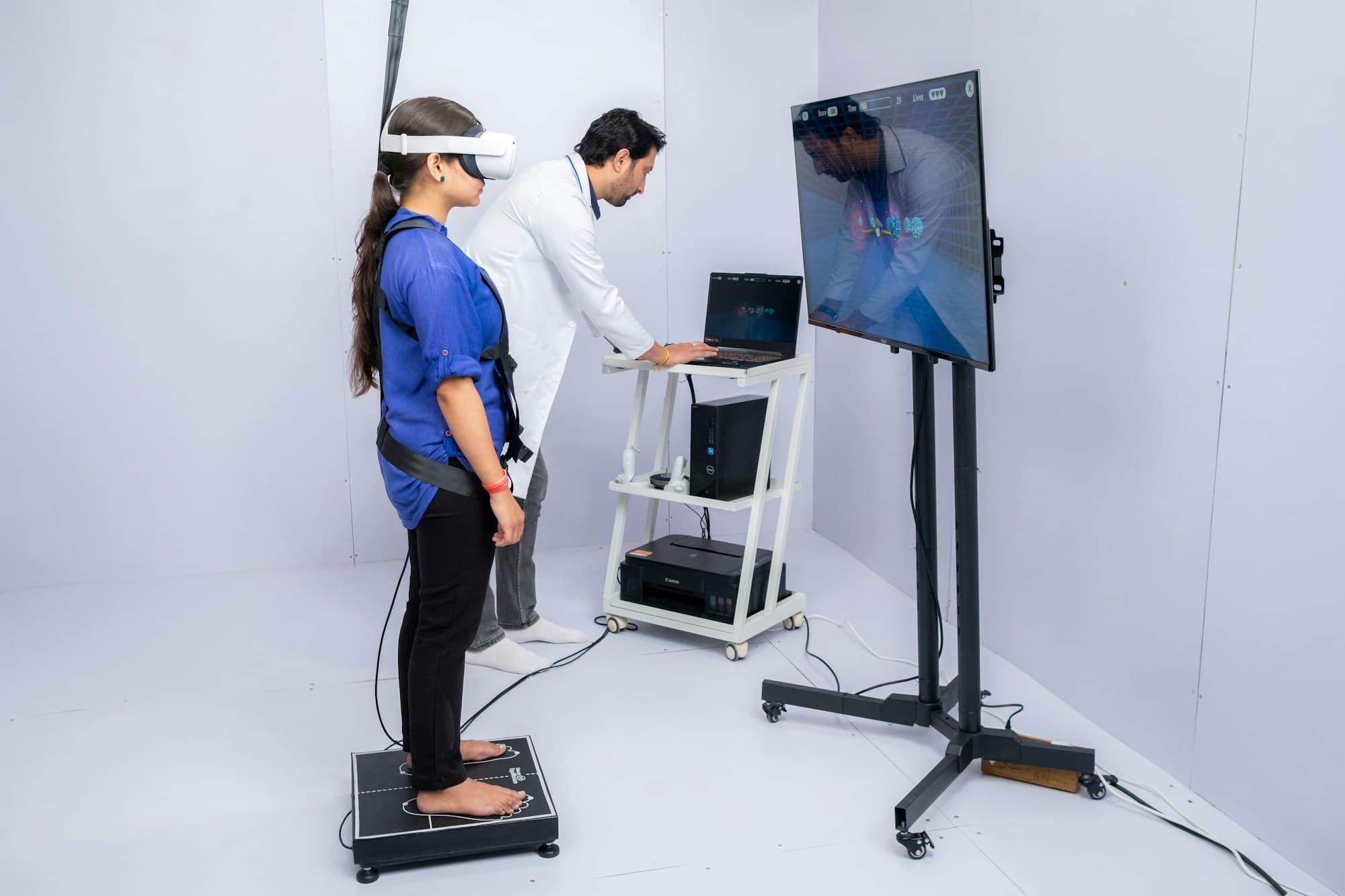
The proposal draws on an on-site MRI scanner, motion laboratory, force platform, computing laboratory and knee-replacement robotics.
Current Status
Part of an active innovation roadmap.
D.R.E.A.M. KneeAI™ remains an active research concept within the MAI Motion innovation roadmap. Development priorities include dynamic biomarker discovery, alignment modelling, clinical validation and integration into surgical-planning workflows.
01
Data collection
Capture and preprocess functional movement from people with knee osteoarthritis and knee-replacement pathways.
02
Biomarker discovery
Identify interpretable movement features associated with alignment and functional performance.
03
Model and API refinement
Develop the alignment model, APIs, performance monitoring and user interface.
04
Clinical validation
Test the model, annotate data and gather surgeon and user feedback.
05
Regulatory and market preparation
Advance validation reporting, IP review, partnerships and commercial planning.
Application-Stage Evidence Boundary
What the application does — and does not — establish.
The source document describes a proposed R&D programme and intended TRL progression. It does not confirm that the programme was funded, completed, approved or clinically deployed.
Supported by the supplied application
- A formal 12-month industrial-research application proposed dynamic pre-operative planning for knee replacement.
- The supplied application records an overall assessor score of 78.0%.
- The concept uses MAI Motion, CRAFT parameters and a proposed Real-Life Kinematic Alignment model.
- The application described an intended progression from TRL 4 to TRL 6 through data, model, API and validation work.
Not established by the supplied application
- That Real-Life Kinematic Alignment has been clinically proven to improve satisfaction or reduce revision surgery.
- That the system can currently determine the optimal implant position for an individual patient.
- That regulatory approval, NHS pilots, hospital adoption or commercial availability have been achieved.
- That a 78.0% application score confirms an Innovate UK funding award.
Source provenance
- Application
- Biomedical Catalyst 2024 Round 1: Industry-led R&D
- Official title
- Dynamic Real-Time Kinematic Evaluation and Analysis of Motion with Artificial Intelligence for Knee Surgery
- Lead organisation
- MSK Doctors & Associates Limited
- Partner
- Single-applicant programme
- Proposed duration
- Proposed 12-month industrial research programme
- Proposed maturity
- TRL 4 to TRL 6
- Source date
- 8 December 2025
The supplied application records an overall assessor score of 78.0%. This does not, by itself, prove that funding was awarded.
Precision should begin with the patient’s movement
D.R.E.A.M. KneeAI™ is designed to move knee-replacement planning beyond the question ‘How accurately can we place the implant?’ towards the more important question ‘What is the right functional target for this patient?’
D.R.E.A.M. KneeAI™ is an AI-enabled surgical-planning research concept developed by MSK Doctors & Associates and described in a Biomedical Catalyst industrial research application, continuing to develop within the active innovation pipeline.
Academic & Clinical Collaboration
We welcome collaboration with arthroplasty surgeons, hospitals, implant and robotics companies, universities and health-technology partners interested in prospective validation.